Beyond the Walk
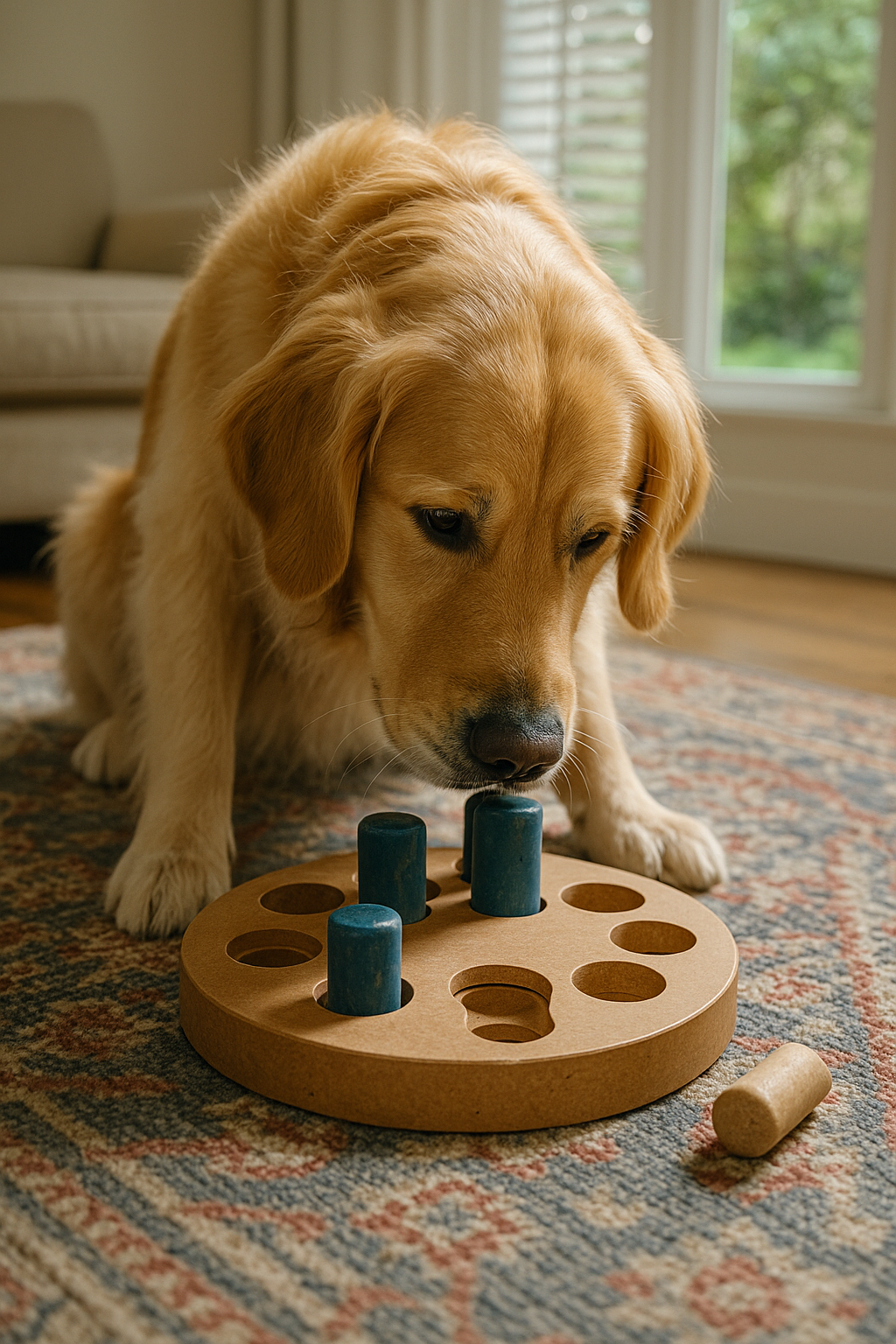
We’ve all heard it before: “A tired dog is a good dog.” It’s an idea that has shaped how people think about canine wellness for decades. And while there is truth to the importance of physical exercise, it’s also a phrase that oversimplifies what dogs actually need. We’ve been taught to chase the physical output—to tire out the body—but we’ve largely ignored the mind. And for many dogs, that’s where the problems start.
At The Traveling Dog Sitter, I live with the dogs I care for. I’m not just there for 20-minute walks or food bowl refills. I’m embedded in their daily lives, witnessing the rhythm of their days and their subtle behavioral shifts. And again and again, I see it: the dog who’s had a solid walk, a full belly, a comfy bed—but still can’t settle. Still paces. Still whines. Still seems off. That’s not physical restlessness. That’s mental hunger.
Dogs Need More Than Movement
Canine wellness isn’t a one-dimensional concept. Dogs don’t just need to run or fetch. They need engagement. They need novelty. They need to use their brains. Without opportunities for mental stimulation, many dogs begin to unravel—not because they’re poorly behaved, but because they’re underchallenged. This manifests as chewing, digging, reactivity, or anxiety—not because they’re “bad dogs,” but because they’re frustrated, bored, or stressed.
Dogs are wired to solve problems, use their noses, make decisions, and adapt to new situations. In the wild—or even on farms—these skills are exercised constantly. In modern households, though, those instincts go largely unused. And when they go unused, they don’t go dormant. They go sideways.
Imagine if your only form of stimulation was the same walk, on the same route, at the same pace, every day. You’d go stir-crazy, too.
What Happens When Mental Needs Are Ignored?
A dog who is physically active but mentally understimulated is still unbalanced. You’ll often see behaviors that are misread as “acting out,” when they’re really just attempts to self-soothe or create stimulation. A dog might start tearing up couch cushions, or barking endlessly at nothing, or following their owner from room to room, unable to settle. These are symptoms, not personality flaws.
Mental frustration can lead to anxiety, hyper-vigilance, and even compulsive behavior. Some dogs spin in circles. Others fixate on shadows. Some develop obsessive grooming habits or even lash out. These aren’t signs of a dog with too much energy—they’re signs of a dog whose energy has nowhere to go except inward.
By contrast, dogs who receive regular mental stimulation often display fewer anxiety-related behaviors, sleep more soundly, and approach new situations with greater confidence. Mental enrichment acts like a pressure valve—it gives the brain somewhere productive to go.
Mental Stimulation Isn’t Complicated—But It Is Intentional
When people hear the term “mental enrichment,” they often picture expensive puzzle toys or elaborate agility setups. But that’s not what it means. Mental stimulation is about inviting your dog to think, investigate, and adapt. It can be as simple as asking for a few tricks before dinner. Letting your dog sniff their way through a neighborhood walk instead of rushing them along. Hiding treats around the room and watching them problem-solve.
The key isn’t in the props—it’s in the process. A good mental activity encourages your dog to work their brain in a way that feels natural. For some dogs, that might be scent-based games. For others, it’s training new cues. For seniors, it could be as simple as chewing on a food-stuffed toy while lounging. What matters is the experience of engagement.
For example, I once cared for a senior Golden Retriever who had limited mobility. Long walks weren’t an option, but her mind was still sharp. So we created a “scent trail” indoors, placing bits of kibble under cups and in corners. She lit up. Her tail wagged. Her eyes focused. By the end, she was panting not from exhaustion, but from excitement. She slept like a rock that night.
Another dog, a young Vizsla, needed structure. Without it, he bounced off the walls. We implemented brief but frequent training sessions throughout the day—10 minutes of obedience work in the morning, a place-stay challenge in the afternoon, a new trick before bedtime. His restlessness eased. He was calmer, more connected, more responsive. And he stopped jumping on counters.
Engagement as an Act of Care
The magic of mental stimulation isn’t just in the behavioral improvement—it’s in what it communicates. When you offer your dog thoughtful activities, you’re saying, “I see you. I respect your needs. I want you to thrive.” Dogs know when they’re being engaged. They feel it. And that feeling builds trust.
This is especially true for dogs with trauma histories or heightened sensitivities. Engagement—done slowly, respectfully, and consistently—can be a powerful rehabilitative tool. It gives nervous dogs something to focus on besides their anxiety. It offers structure without pressure. And over time, it lays the foundation for confidence.
I’ve worked with rescues who wouldn’t take food from my hand on Day 1. But by Day 4, they were hunting for treats in a snuffle mat I left out. On Day 6, they wagged when they saw me holding a puzzle toy. These weren’t obedience breakthroughs. They were emotional ones.
Adapting to the Individual
Mental stimulation isn’t one-size-fits-all. A routine that excites one dog may overwhelm another. Breed, age, temperament, and history all matter. A reactive herding dog might need structured scent work to build focus. A mellow senior might prefer low-pressure foraging. A fearful rescue might benefit from passive observation—watching the world from a distance, safely and quietly.
That’s why presence matters. You can’t design meaningful enrichment if you’re not tuned into the dog. This is where being a live-in sitter gives me an edge. I’m not guessing based on a checklist—I’m observing in real time. I’m adjusting as I go. And I’m choosing activities that support the dog in front of me, not just the ideal in my head.
It’s Not About Tiring Them Out. It’s About Filling Them Up.
We need to shift our thinking. The goal isn’t to run a dog into the ground until they collapse. That’s not fulfillment—it’s fatigue. Instead, the goal should be to offer balance. Movement and stillness. Excitement and rest. Challenge and comfort.
Mental stimulation plays a crucial role in that balance. It satisfies a dog’s inner world. It calms their nervous system without demanding constant motion. It creates moments of connection, shared success, and gentle challenge.
And it doesn’t have to be perfect. Even small efforts add up. A five-minute training session. A new texture to walk on. A foraging opportunity in the backyard. These acts communicate attention. They build resilience. They help your dog feel not just exercised, but understood.
Redefining Wellness: A Final Word
If you’re a pet parent, a dog care professional, or someone who simply loves dogs—this matters. Because how we define care shapes the lives of the animals who depend on us.
We can’t afford to think of wellness as just long walks and full bellies. That’s a start—but it’s not the finish line. Wellness includes the emotional, the intellectual, and the relational.
So the next time you plan your dog’s day, ask yourself: What am I giving their mind to do? Am I meeting more than just their physical needs?
Because the dogs who are fulfilled mentally aren’t just tired at the end of the day—they’re satisfied. Relaxed. At peace.
And in a world full of overstimulation, that kind of contentment is the ultimate gift we can offer.
Book a Free Consultation