Trust Isn’t a Bonus – It’s the Product
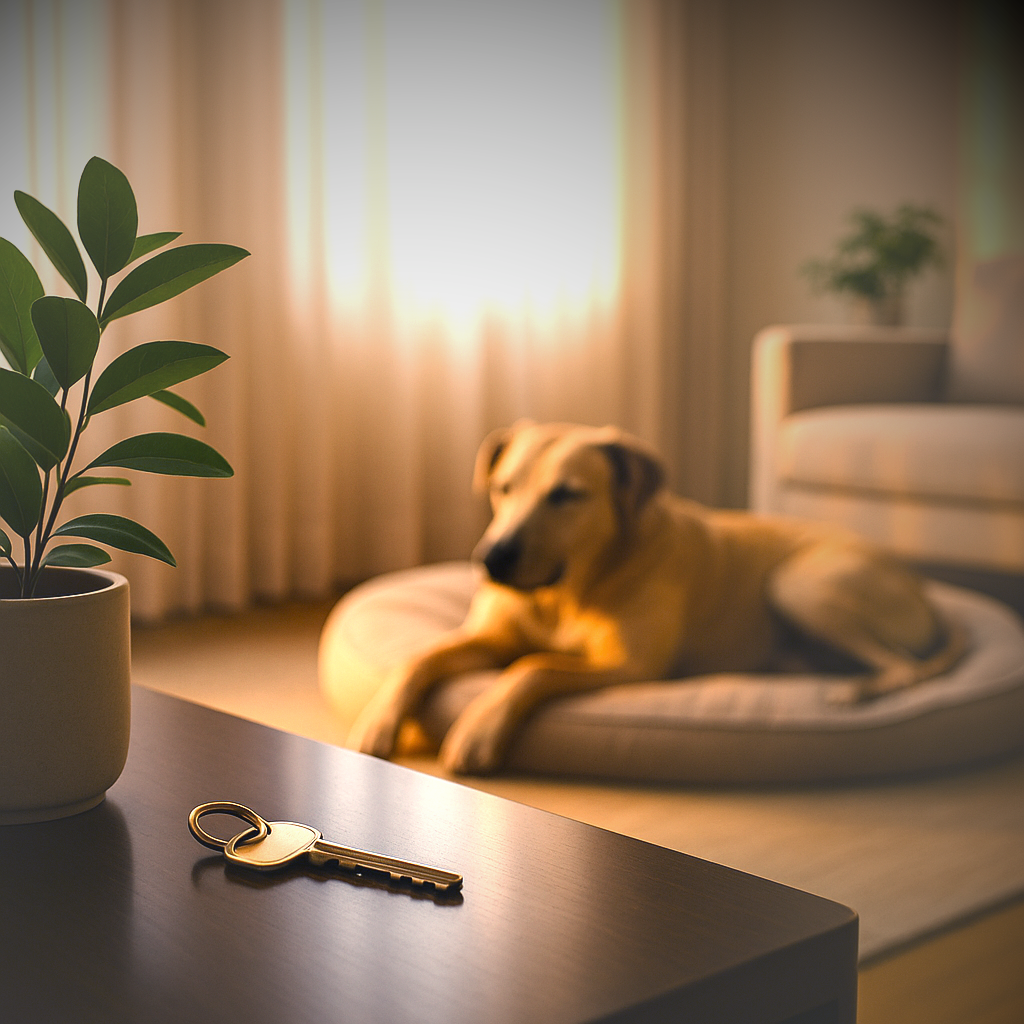
In the world of luxury pet care, you might think clients are paying for services like feeding schedules, medication administration, enrichment activities, or even houseplant watering. And sure, those things matter. But at the premium level, that’s not what justifies the price.
They’re not buying a service. They’re buying peace of mind.
And peace of mind is built entirely on trust.
Trust isn’t a nice-to-have. It isn’t the cherry on top. It’s the core product you’re offering. In fact, for high-end clients, everything else you do, from walking to wellness to winding down the house, only works because they trust you.
Let’s look at what trust actually means in luxury pet care, and how it becomes your most valuable currency.
The Surface vs. The Substance
At first glance, the work of a pet sitter might look logistical: follow a list, keep the pet safe, report back to the owner.
But anyone who has actually done high-end in-home care knows this: the tasks are just the framework. They’re the visible skeleton. But what gives the entire experience its weight is how you move through the space, how you interact with the dog, and how seamlessly you blend into the client’s world without disturbing its flow.
What matters most is how you carry yourself while doing them.
- Are you calm in moments of uncertainty?
- Do you read the dog’s body language like a second language?
- Can you handle tension (in the home, with the client, or with the pet) with quiet steadiness?
- Do you know when not to text the client, and when it absolutely matters? The high-end pet care client isn’t shopping for chores. They’re shopping for someone who will protect their peace, and who understands what it takes to do that without drawing attention to the process.
Why “Task-Oriented” Is Not Enough
Many sitters focus on being “detailed” and “reliable.” Great, but that’s the bare minimum. High-paying clients assume you’re going to show up and do what you said you would do.
But that doesn’t win loyalty. That doesn’t build advocacy. That doesn’t make someone leave you the keys to their home and their heart without hesitation.
What does?
- Solving problems they didn’t know they had.
- Preempting their needs.
- Creating a calm, confident atmosphere so they never have to second-guess you.
- Becoming someone their pet prefers over almost anyone else.
In this space, emotional labor is the hidden work. The emotional regulation. The intuitive decisions. The ability to be with a dog, especially one who’s struggling emotionally or behaviorally, without needing to fix, push, or ignore.
You’re not clocking in. You’re stepping into a relational space that demands consistency, groundedness, and subtlety. And that’s not something you can fake. It’s lived. Felt. Earned.
Trust Is Built in the Invisible Moments
Trust isn’t something you ask for. It’s something you show, in the quiet margins:
- You lock the door every time without being reminded.
- You wipe the counters even though it wasn’t mentioned.
- You notice when the dog is licking their paw more than usual.
- You keep their routines sacred without turning them into a performance.
- You don’t photograph or share their home, even if the dog looks adorable in that lighting.
- You unplug the coffee maker. You water the fiddle-leaf fig. You don’t say a word.
Clients don’t remember everything you said or did. But they remember how they felt when they left town. Did they have to check in? Or did they exhale?
That exhale is everything.
That’s what you’re selling.
Why High-End Clients Are Different
People who hire luxury pet sitters usually aren’t doing it because they don’t have other options. They have friends, family, maybe even a full-time household staff.
They hire you because:
- They value the emotional stability of their pets.
- They want minimal disruption.
- They’re protective of their privacy.
- They understand that peace of mind is worth paying for.
- They have high standards, and trust is non-negotiable.
They aren’t trying to save a buck.
They’re trying to avoid stress.
This means your ability to deliver a seamless experience, one where they forget about problems before they even arise, is your most marketable skill.
You’re not there to impress. You’re there to regulate the space. To preserve the emotional ecosystem of the home while they’re away.
What Does Trust Look Like in Practice?
- 1. Respecting Their Home Like a Sacred Space
You don’t go into drawers. You don’t touch what isn’t yours. You leave things cleaner than you found them. You treat the space like a reflection of the client’s interior world, because in many ways, it is. - 2. Understanding Emotional Energy
You read the dog’s emotional state the moment you walk in. You adjust. You don’t project. You don’t make it about you. You sit quietly when needed, and move gently when necessary. - 3. Never Oversharing
Even a harmless post like “Hanging out with a cutie this weekend!” with a dog photo can break trust. You’re in someone’s home. Their lives are not your marketing material. Discretion isn’t old-fashioned, it’s vital. - 4. Honoring Their Routine Without Rigidity
It’s not about robotic repetition. It’s about knowing which parts of the routine are emotionally important to the dog (and the client) and which ones can flex with empathy and grace. - 5. Discretion in All Things
Clients want to know you’re invisible when you need to be and attentive when it counts. They don’t want a play-by-play. They want to feel like their home is in the hands of a seasoned professional. - 6.Tuning In and Downregulating
When a dog paces, vocalizes, or isolates, you don’t rush to solve. You become the steady metronome in their day. You mirror calm. You guide gently. That’s what emotional leadership looks like.
Calm is Contagious: Why Your Energy Matters
You are the anchor of the environment. When you’re grounded, the dog relaxes. When you’re calm, the energy shifts. When you’re emotionally present, the dog trusts you.
Anxious dogs? They don’t need more correction.
They need your calm.
High-energy dogs? They don’t need more barking from you.
They need rhythm.
Fearful dogs? They don’t need pity.
They need quiet confidence.
When a dog begins to mirror your state instead of reacting to your presence, trust is beginning to bloom.
You teach the dog, and the client’s household, what a grounded presence looks like. And that may be the most valuable thing you offer.
Trust Is the Basis for Every Outcome Clients Actually Care About
Why do clients hire you?
It’s not because you feed the dog.
It’s because they want the dog to be emotionally balanced, well-behaved, and not regress while they’re gone.
All of that starts with trust.
Behavioral wellness, health monitoring, safety, and overall stability all trace back to whether or not the dog trusts you, and whether the client believes you can sustain that relationship with consistency.
A trusted sitter becomes a pattern-breaker in the best way. They become the person who gently raises the standard of care, without ever saying it out loud.
You Don’t Sell Pet Sitting. You Sell Peace of Mind.
When your entire service is designed around trust, your messaging changes.
- You’re not talking about how many walks you do per day.
- You’re not bragging about how many dogs you’ve watched.
- You’re not promising constant updates and endless photos.
You are selling peace. Stability. A regulated nervous system. You’re saying:
“Your dog won’t just be okay. They’ll be grounded, safe, and understood.”
When you internalize this, your content, your conversations, and even your client boundaries begin to shift into alignment. You realize you’re not a helper. You’re a partner.
You’re not filling a gap. You’re holding a space.
When You Center Trust, You Filter Clients Differently
Not every client is your client.
The ones who want daily texts and cameras in every room? Not for you.
The ones who undercut your rates? Not for you.
The ones who want a warm body but not a real professional? Definitely not for you.
When you lead with trust as your core offer, you draw in:
- People who get it.
- People who refer you to other high-trust households.
- People who value emotional stability as much as you do. You no longer market to everyone. You magnetize your right people. And those people pay well, respect boundaries, and come back again and again.
Final Thoughts: Be the Safe Place
High-end pet care isn’t about bells and whistles.
It’s about emotional anchoring.
It’s about showing up so consistently that even the most anxious pet, and their most particular owner, can finally relax.
So the next time someone asks you what you do, don’t list off tasks.
Try this:
“I give people the freedom to travel without worry. Because I’m not just taking care of their pet. I’m protecting their peace.”
Trust isn’t a perk.
It’s the product.
And when you own that? You’re not just a sitter.
You’re a sanctuary.